 Fixated on Home
Revolutionizing Home Upgrades with AI-Powered Devices
Modern home renovations are no longer just about aesthetics or functionality—they're about intelligence. AI-powered smart devices bring predictive automation, personalized design, and seamless efficiency to your living spaces. Whether you're gutting your kitchen or reimagining your living room, integrating these technologies during renovations ensures a future-proof home. This guide walks you through the features, step-by-step installations, compatibility tips, energy savings, and strategies to make your upgrade last.
Key Features of AI Smart Devices
AI elevates smart homes beyond basic remotes. Predictive automation anticipates your needs: lights dim as sunset approaches, thermostats adjust based on your routine, and appliances preheat dinner when you're en route home. Personalized home design uses AI to adapt lighting, colors, and layouts to your preferences via apps or voice commands.
- Predictive Automation: Devices learn habits for proactive adjustments.
- Personalization: Custom scenes for mood, activity, or guests.
- Voice & Gesture Control: Hands-free operation with assistants like Alexa or Google Assistant.
- Security Integration: AI detects anomalies in cameras and locks.
These features shine during renovations, wiring new hubs for whole-home coverage.
Essential AI Devices for Renovations
Focus on hubs like Google Nest Hub or Amazon Echo Show as central brains. Add smart lights (Philips Hue), thermostats (Nest Learning), plugs (TP-Link Kasa), and appliances (Samsung Family Hub fridge). For kitchens: AI ovens and fridges. Living rooms: soundbars and TVs with AI upscaling.
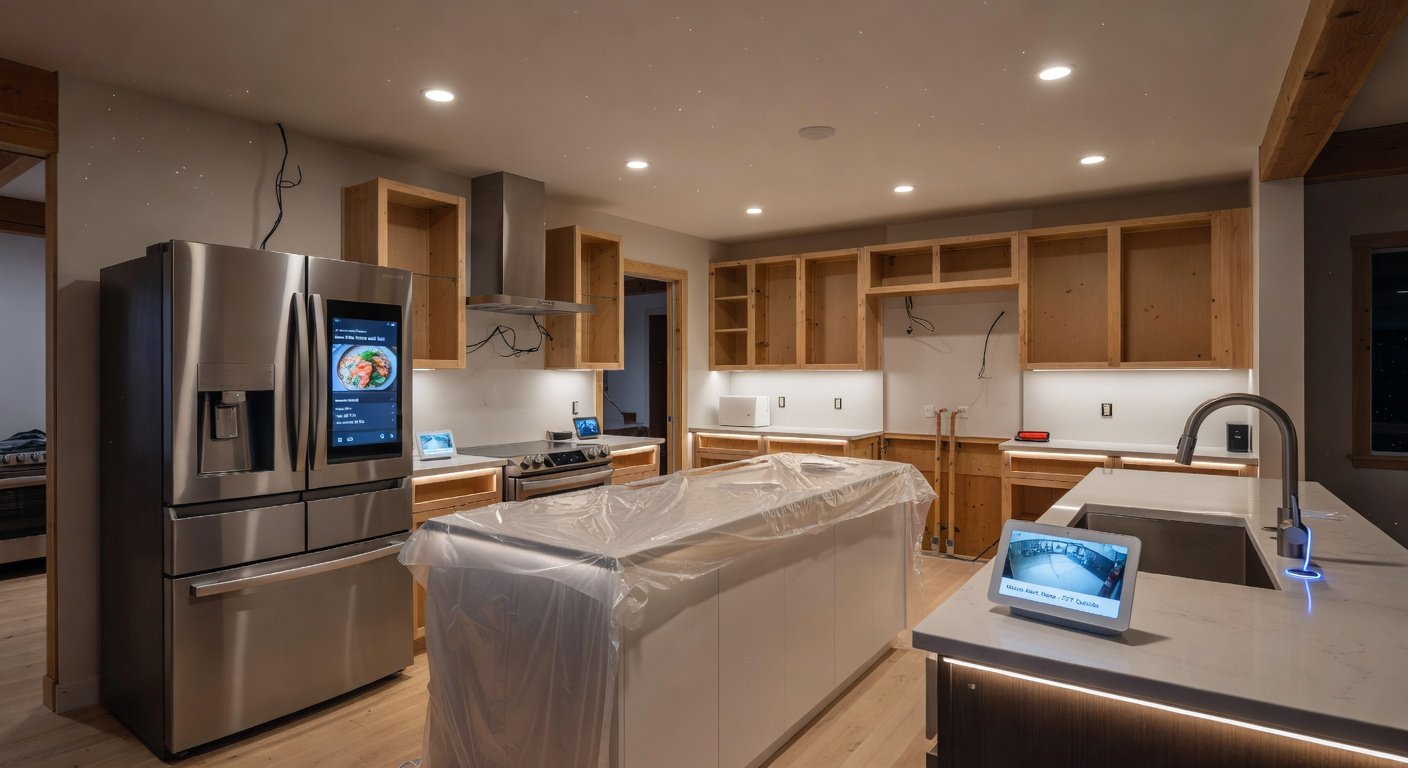
Step-by-Step Kitchen Integration During Renovation
Kitchens are high-traffic zones perfect for AI. Plan during demo phase for clean wiring.
- Assess Layout & Power: Map outlets for hubs, lights, and appliances. Ensure 2.4GHz Wi-Fi coverage; consider mesh systems like Eero.
- Install Central Hub: Mount a wall-embedded Nest Hub near the island. Connect to power and Ethernet for stability.
- Smart Lighting & Under-Cabinet Strips: Wire LED strips (Nanoleaf) into cabinets. Use AI groups for 'cooking mode'—bright whites—or 'dinner mode'—warm ambiance.
- AI Refrigerator & Oven: Position Samsung Bespoke fridge with Family Hub screen for recipes and inventory tracking. Install Wi-Fi oven (GE Profile) wired for voice preheat.
- Voice-Activated Faucets & Sinks: Add Moen U by Moen touchless faucets linked to hub for hands-free water.
- Test & Automate: Pair via apps. Set routines: 'Grocery mode' lists items as fridge sensors detect lows.
Pro tip: Use conduits in walls for future Cat6 cabling.
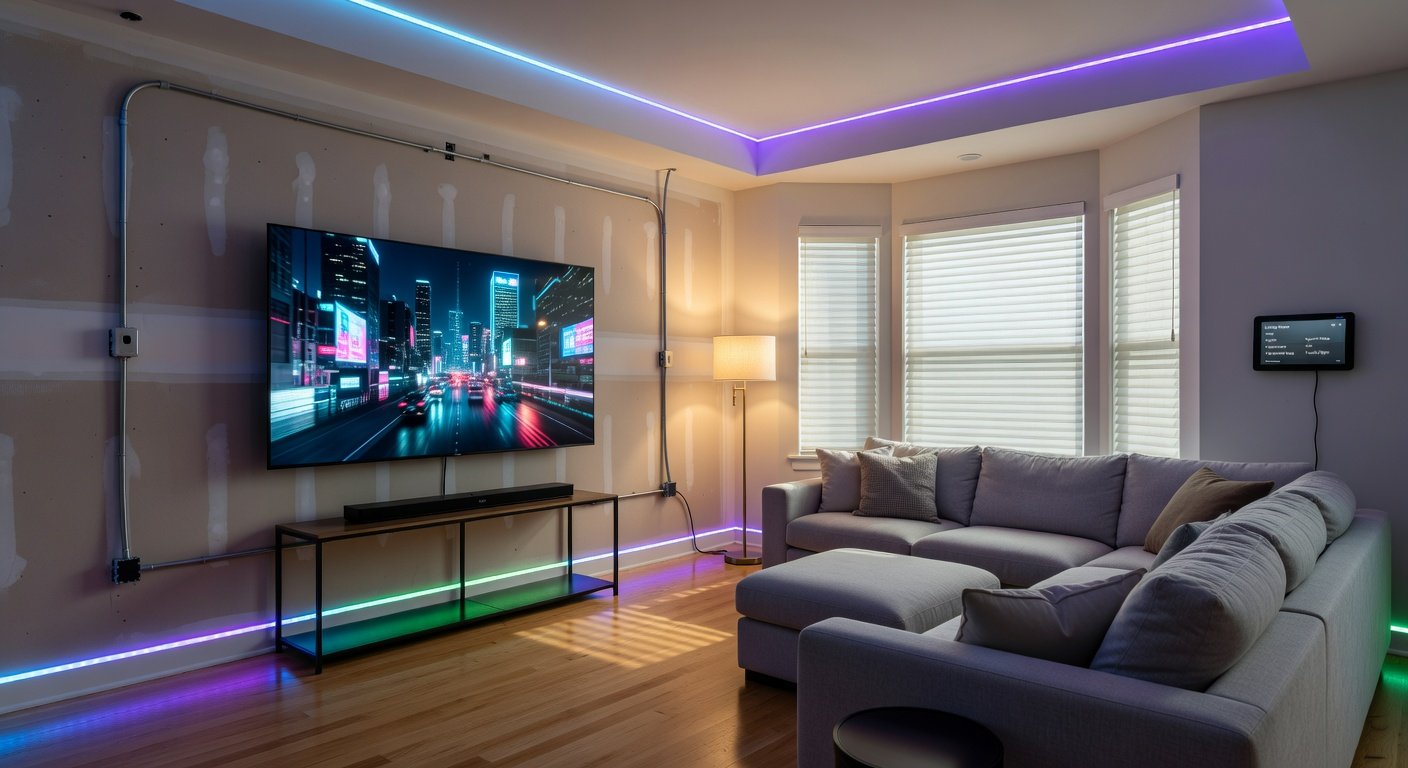
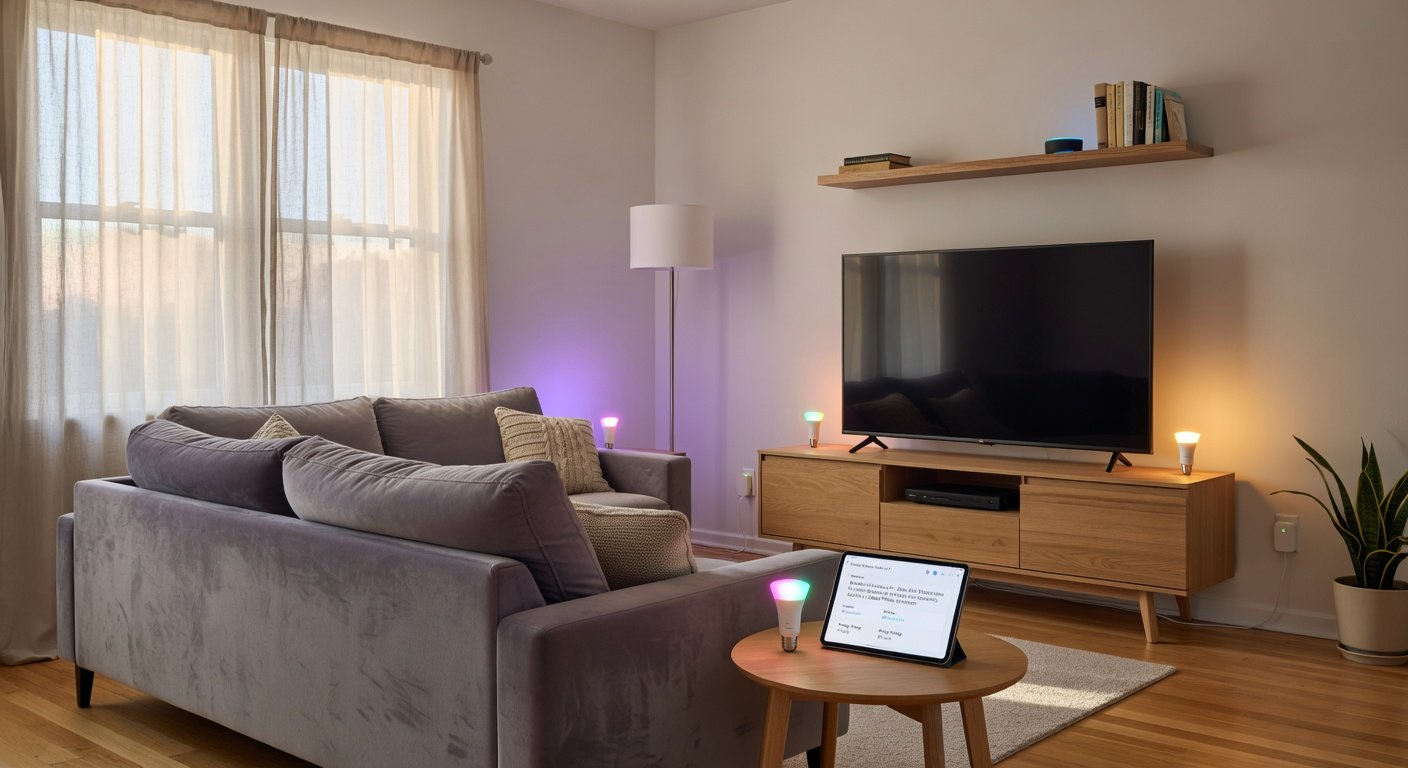
Step-by-Step Living Room Setup
Living rooms demand immersive AI for entertainment and comfort.
- Plan AV Wiring: Run HDMI 2.1 and Ethernet behind walls for TVs and sound systems.
- Central Hub Placement: Ceiling-mount Echo Show 15 above seating for visibility.
- Smart Projector or TV: Integrate LG OLED with AI ThinQ for scene optimization—sports mode boosts contrast automatically.
- Dynamic Lighting: Recessed AI bulbs (Govee) zoned for movie nights (dim) or parties (color pulses).
- Thermostat & Blinds: Nest Thermostat on wall; motorized Somfy blinds sync for sunset fades.
- Sound System: Sonos Arc with AI Trueplay tunes audio to room acoustics.
- Configure Scenes:
- 'Movie Night': Lights low, blinds down, AC cool.
- Hubs: Matter controllers like Aqara Hub.
- Apps: HomeKit, Google Home, Alexa unify control.
- Set geofencing: Systems sleep when all leave.
- AI optimizes: Fridges run efficiently during off-peak.
- Track via apps for rebates—many utilities incentivize.
- Wiring Foundations: Install structured cabling (Cat6a, fiber-ready) and extra conduits.
- Power Management: Dedicated circuits for high-draw devices; PoE for cameras.
- Privacy & Security: Use VPNs, 2FA; opt for local processing hubs.
- Scalable Hubs: Choose upgradable like Home Assistant on Raspberry Pi.
- Budget for Expansions: Start core, add sensors yearly.
Test interoperability with multi-device routines.
Ensuring Compatibility Across Devices
A fragmented ecosystem kills smart homes. Prioritize Matter standard for cross-brand harmony. Matter-smarthome.org details this IP-based protocol supported by Apple, Google, Amazon, and Samsung. During reno, choose Thread-enabled devices for mesh networking—no Wi-Fi overload.
Unlock Energy Savings with AI
AI slashes bills by 10-30%. Predictive thermostats learn patterns, saving 15% on HVAC per energy.gov studies. Lights auto-off unused areas; plugs monitor vampire power.
Future-Proofing Your Smart Renovation
Tomorrow's AI demands scalability.
Monitor standards like Zigbee 3.0 for longevity.
Common Pitfalls & Pro Tips
Avoid Wi-Fi dead zones with site surveys. Budget 10-15% extra for smart tech. Hire certified installers for complex wiring. Test post-drywall before finishes.
Conclusion: Build the Home of Tomorrow Today
Integrating AI during renovations isn't a luxury—it's essential for efficient, intuitive living. From kitchen efficiencies to living room magic, these steps deliver immediate value and enduring adaptability. Start planning your upgrade, and watch your home evolve intelligently.
No comments yet. Be the first!