 Fixated on Home

Introduction to Hidden Smart Sensors
Minimalist homes in 2026 emphasize clean aesthetics, open spaces, and functional simplicity while integrating advanced technology for everyday comfort. Hidden smart sensors represent a key innovation in this space, allowing homeowners to monitor security, manage climate, and automate routines without visible devices cluttering walls or surfaces. These compact units embed into architecture, furniture, or millwork to deliver precise data on motion, temperature, humidity, air quality, and occupancy. The result is a home that feels serene and uncluttered yet responds intelligently to its occupants and environment.
Renovators targeting 2026 upgrades often prioritize low-impact solutions that preserve design integrity. Hidden sensors support this by reducing visual noise while providing measurable benefits such as lower energy consumption and enhanced safety. This guide covers overlooked integration methods, practical placement techniques, technology comparisons, and real-world installation approaches suited to minimalist renovations.
Understanding Sensor Types for Minimalist Designs
Several sensor categories work well in minimalist settings because they can be fully concealed. Motion detectors using passive infrared technology sense movement for security and lighting automation. Temperature and humidity sensors track environmental conditions to optimize heating, cooling, and ventilation. Air quality sensors monitor particulates, volatile organic compounds, and carbon dioxide levels, supporting healthier indoor environments. Occupancy sensors combine multiple detection methods to determine whether rooms are in use, enabling automatic adjustments to lights and HVAC systems.
Each type can be selected based on specific home needs. For instance, ultrasonic or microwave motion sensors penetrate certain materials for broader coverage when recessed into ceilings. Advanced models incorporate multi-sensor fusion, combining motion with temperature data for more accurate automation. In 2026, many units also support edge processing, allowing local decision-making without constant cloud connectivity, which improves privacy and response times in minimalist homes with limited visible infrastructure.
Placement Strategies for Security and Climate Control
Effective placement balances performance with concealment. For security, embed motion sensors in door frames, window sills, or crown molding at heights between four and six feet to capture typical human movement patterns while avoiding pets. Climate sensors should sit on interior walls at eye level in central living zones, away from direct sunlight, radiators, or air vents that could skew readings. In open-plan minimalist layouts, position air quality sensors near high-activity areas like kitchens but route them behind cabinetry or within ventilation grilles finished to match surrounding surfaces.
Consider room-specific applications. Bedrooms benefit from discreet humidity sensors integrated into headboards or bedside furniture to maintain optimal sleep conditions. Living areas can use ceiling-recessed occupancy sensors that blend with recessed lighting layouts. Hallways and entryways work well with flush-mounted sensors in baseboards for seamless security coverage. Always map traffic patterns and sunlight exposure during planning to prevent false readings or inefficient operation. Professional designers recommend testing placements with temporary mounts before final installation to verify coverage and accuracy.
Wired Versus Wireless Options Compared
Wired sensors connect directly to a home's electrical or data network, offering consistent power and stable communication ideal for new construction or extensive renovations. They eliminate battery maintenance and provide higher bandwidth for frequent data transmission. Wireless sensors, by contrast, rely on battery power, energy harvesting from light or vibration, or low-power protocols such as Zigbee, Z-Wave, or Thread. These options suit retrofits because they require minimal wall disruption and can be relocated easily as room functions change.
Wireless systems excel in minimalist renovations where preserving existing finishes is a priority. However, they demand attention to signal range and potential interference from thick walls or metal elements common in modern architecture. Many 2026 wireless models now feature extended battery life exceeding two years and support mesh networking for reliable coverage across larger homes. Homeowners should evaluate both approaches against their renovation scope, existing infrastructure, and long-term maintenance preferences.
Step-by-Step Installation Examples
Successful installation begins with a full compatibility review of your current smart home ecosystem. Identify supported protocols and confirm hub firmware is up to date. Create a simple floor-plan diagram marking potential sensor locations and required coverage zones.
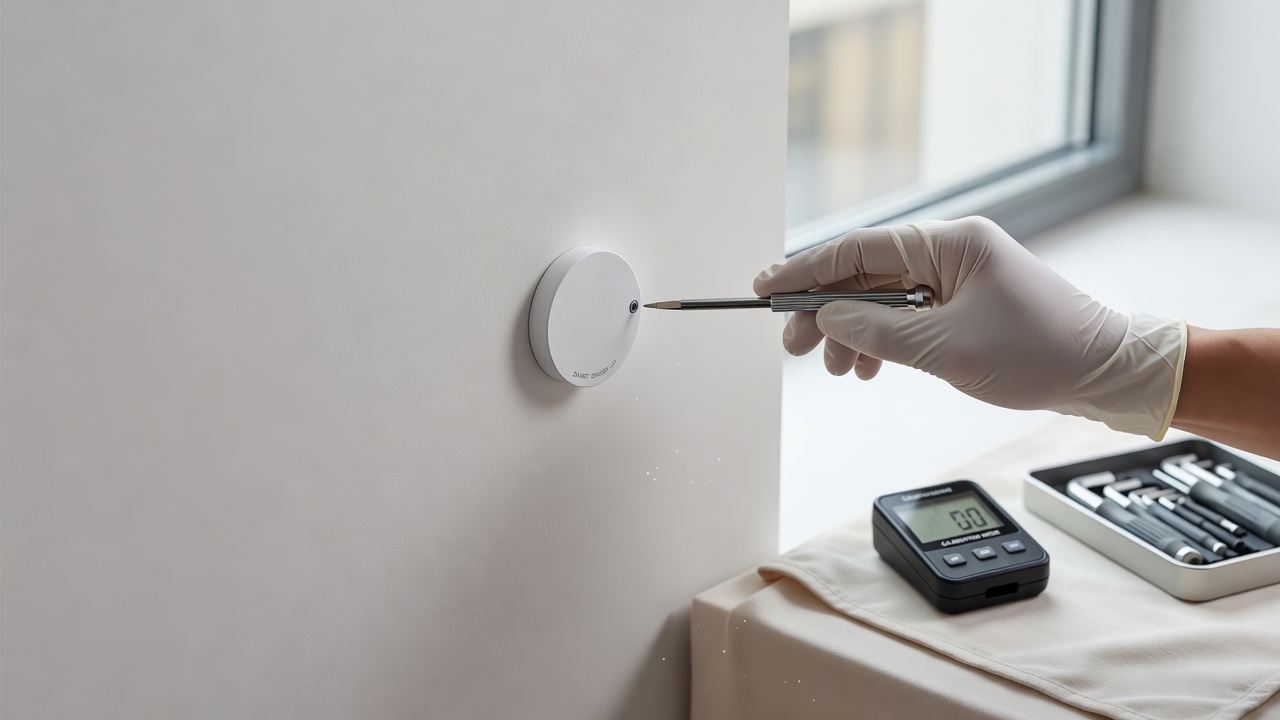
For a wireless temperature and humidity sensor in a living room:
- Choose a shaded interior wall location at least three feet from windows or vents.
- Use a flush-mount bracket or magnetic adhesive designed for minimalist finishes.
- Insert batteries or connect to any energy-harvesting module, then pair the device through the hub mobile app.
- Calibrate the sensor against a reference thermometer and adjust reporting intervals for energy efficiency.
- Conceal any visible edges with matching paint or trim pieces.
For a wired security motion sensor during a wall renovation, route low-voltage cabling through studs before drywall installation, terminate at a recessed junction box, and finish with a paintable sensor faceplate. Multiple examples like these demonstrate how early planning during renovation phases achieves near-invisible results.
Energy Savings and Convenience Benefits
Hidden sensors contribute directly to reduced energy use by enabling precise control of heating, cooling, and lighting based on actual occupancy and conditions. Automated adjustments prevent wasteful operation in unoccupied spaces. Over time, these incremental savings accumulate while maintaining comfort levels. The U.S. Department of Energy provides resources on home energy management that align well with sensor-driven strategies. Convenience improves as routines become automated, such as pre-heating rooms before arrival or activating security modes when the last occupant leaves.
Compatibility Checks with Existing Systems
Before purchasing, verify that chosen sensors communicate with your primary hub or voice assistant platform. Test wireless signal strength throughout the property using manufacturer apps. Many current systems allow over-the-air updates that add new features and maintain compatibility with evolving standards. Document all device credentials and network settings for future troubleshooting or system expansions.
Common Mistakes to Avoid
- Placing sensors too close to heat sources or direct light, leading to inaccurate climate data.
- Neglecting to account for furniture movement that could block sensor fields of view.
- Choosing incompatible protocols that require additional hubs and increase system complexity.
- Skipping calibration steps, which reduces overall effectiveness and reliability.
- Overlooking regular firmware updates that address security vulnerabilities.
FAQ: Common Setup Pitfalls
- How do I avoid false triggers? Position sensors away from HVAC vents, ceiling fans, and pets by using pet-immune settings where available.
- What if batteries fail unexpectedly? Select models with low-battery alerts and consider hybrid wired-wireless critical zones.
- Are these sensors secure from hacking? Choose devices with end-to-end encryption and follow NIST cybersecurity guidelines for IoT devices.
- Can sensors integrate with older homes lacking smart hubs? Start with standalone wireless units that connect directly to Wi-Fi and expand later.
Conclusion
Hidden smart sensors offer practical, low-impact enhancements for 2026 minimalist home renovations. Through careful selection, strategic placement, and thoughtful integration, homeowners achieve improved security, precise climate management, and meaningful energy efficiency while preserving clean design aesthetics. Begin with a room-by-room assessment and expand gradually to create a responsive living environment tailored to modern minimalist living.


No comments yet. Be the first!