 Fixated on Home
Introduction to Art Deco Bathroom Remodels in 2026
Art Deco continues to captivate homeowners seeking a sophisticated blend of vintage glamour and contemporary function. In 2026, bathroom remodels inspired by this iconic style emphasize bold geometric patterns, rich metallic finishes, and premium materials that evoke the opulence of the 1920s and 1930s while incorporating modern conveniences. This approach transforms everyday bathrooms into luxurious retreats that reflect personal style and elevate property value. Homeowners are increasingly drawn to Art Deco for its ability to merge timeless elegance with practical renovation solutions. Whether updating a small powder room or overhauling a master bath, the style offers versatility through stepped silhouettes, chevron and herringbone tile layouts, and accents in gold, chrome, and brass. The resurgence in popularity stems from a desire for spaces that feel both historic and forward-looking, especially as design trends shift toward personalization after years of minimalism dominance.
Successful projects often start with a clear vision of how Art Deco elements can enhance daily routines. From the moment you step into a remodeled space featuring dramatic lighting and rich textures, the impact is immediate. This guide delves deeply into every aspect of planning and execution to help you achieve results that stand the test of time.
Core Elements of Art Deco Style for Bathrooms
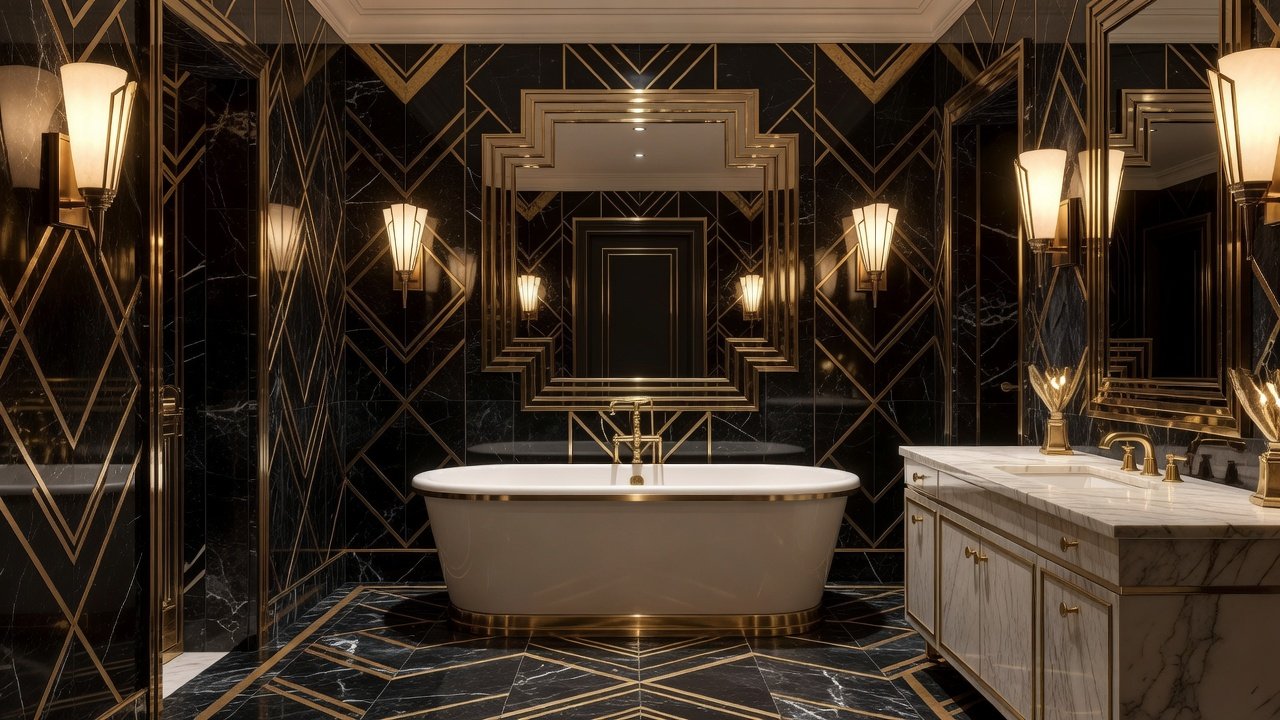
At its heart, Art Deco design features symmetry, angular forms, and lavish textures. For bathrooms, this translates to statement pieces that command attention without overwhelming the space. Key motifs include sunbursts, zigzags, and fan shapes that appear in tile work, mirrors, and lighting fixtures. Metallic finishes remain central, with brushed gold and polished nickel providing warmth and reflectivity that enhance natural and artificial light. Luxurious materials such as marble, onyx, and lacquered wood pair beautifully with these metals to create depth and contrast. Understanding these foundations allows for cohesive designs that avoid common pitfalls like mismatched proportions.
Color palettes typically revolve around deep blacks, creams, and jewel tones accented by metallics. In 2026, many designers incorporate subtle earth tones for a grounded feel while maintaining the style's inherent drama. Exploring historical references can inspire modern interpretations that feel fresh rather than derivative.
Signature Fixtures and Finishes
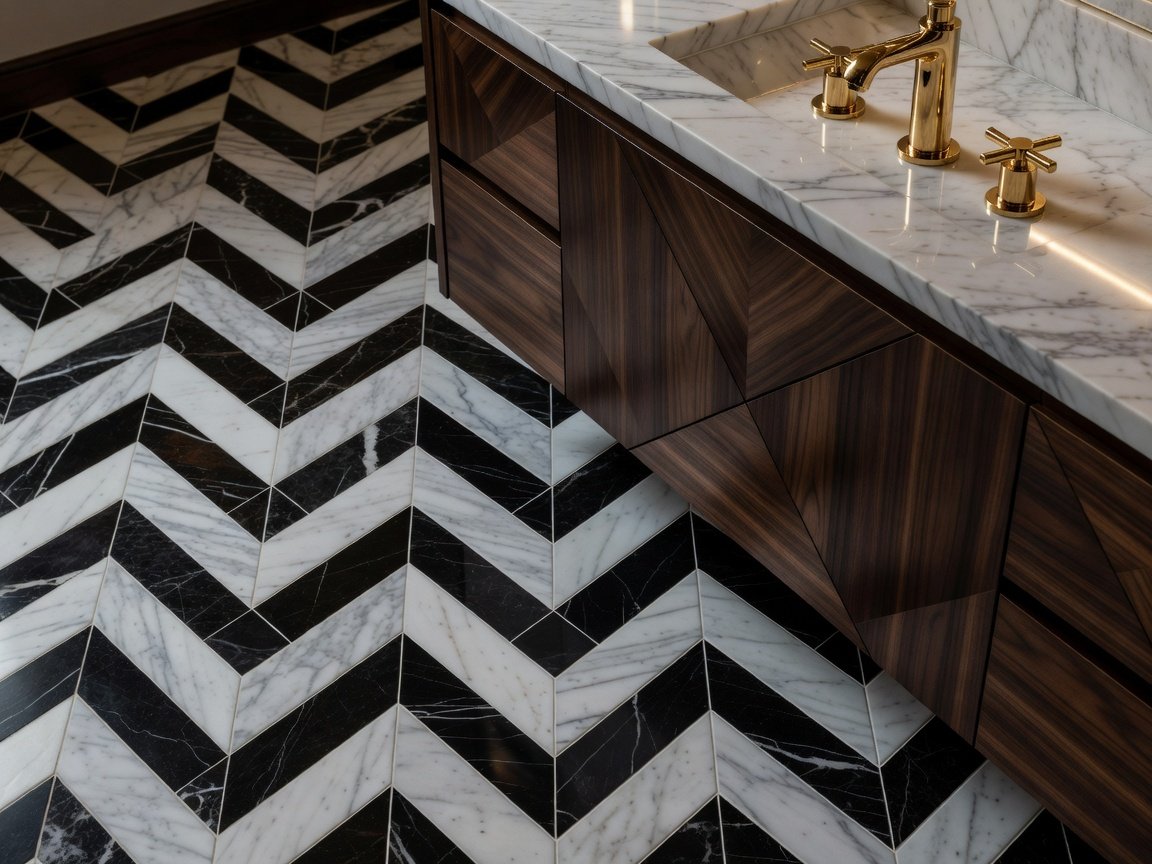
Stepped mirrors with geometric frames serve as focal points, often paired with chevron-patterned floor tiles in black and white or soft neutrals. Wall sconces featuring frosted glass and angular bases add both illumination and sculptural interest. Freestanding tubs with claw feet or sleek pedestal designs complete the look when finished in high-gloss enamel. Recent remodel examples show homeowners integrating these elements in master suites by combining a gold-trimmed vanity with matte black hardware for subtle contrast. One project featured herringbone marble floors offset by a dramatic arched mirror edged in brass, creating an instant sense of grandeur. Another successful case involved layering multiple metallic tones across fixtures to achieve a collected-over-time appearance that feels authentic.
When selecting tiles, consider scale carefully. Large-format geometric patterns work well in spacious baths, while smaller mosaics suit compact areas. Always test samples under your specific lighting conditions to ensure the desired shimmer and depth.
Balancing Opulence with Practical Storage
While Art Deco celebrates luxury, successful 2026 remodels prioritize functionality. Built-in niches with mirrored doors maintain the streamlined aesthetic while offering concealed storage for toiletries. Floating vanities with geometric paneling provide ample drawer space without visual bulk. Consider incorporating pull-out organizers finished in metallic tones to keep the space clutter-free. This balance ensures the bathroom remains a serene, spa-like environment rather than a display case. Additional practical touches include hidden charging stations integrated into vanities and waterproof compartments for electronics, reflecting the needs of modern households.
Art Deco Versus Minimalist Trends
Minimalism favors clean lines and neutral palettes, whereas Art Deco embraces ornamentation and rich color. Many 2026 projects blend the two by using Art Deco details sparingly against minimalist backdrops. For instance, a simple white subway tile wall can be elevated with a single brass-framed mirror and geometric lighting. This hybrid approach appeals to homeowners who want glamour without excess. Comparisons often highlight how Art Deco adds personality where pure minimalism can feel stark. Those exploring options may find inspiration on sites like Houzz for side-by-side visual comparisons of the two styles.
Step-by-Step Planning Checklist
- Assess your current layout and identify focal walls for statement tiles or mirrors. Measure all dimensions twice and note existing plumbing locations to avoid costly relocations later.
- Research suppliers for authentic Art Deco-inspired fixtures and materials. Visit showrooms in person whenever possible to evaluate quality and finish durability firsthand.
- Choose a cohesive color palette anchored by metallics and neutrals. Create mood boards that include samples of every material to verify harmony before ordering.
- Plan lighting zones to highlight key features like vanities and tubs. Layer ambient, task, and accent lighting for versatility throughout the day.
- Budget for both statement pieces and practical upgrades such as waterproofing. Allocate extra for unexpected structural issues that often arise during demolition.
- Consult professionals for electrical and plumbing integration with new fixtures. Licensed experts ensure compliance with local codes and prevent future problems.
- Finalize selections and schedule phased installation to minimize disruption. Coordinate deliveries carefully so materials arrive in the correct sequence.
Cost-Saving Tips for Glamorous Results
Focus on high-impact, lower-cost updates first, such as swapping hardware and adding metallic paint accents to existing cabinetry. Source reclaimed or vintage-inspired tiles from specialty suppliers to achieve authentic patterns without premium pricing. Prioritize quality in visible areas like countertops and mirrors while selecting durable yet affordable options for flooring underlayment. Another effective strategy involves mixing high-end focal pieces with mid-range supporting elements, creating visual interest on a controlled budget. Homeowners can also explore online marketplaces for gently used fixtures that retain their original character.
Real-World Examples from Recent Remodels
One notable 2025 project in a historic urban home incorporated original Art Deco windows into the new bathroom design, preserving architectural integrity while adding modern waterproofing. The result featured custom chevron flooring and a vanity crafted from lacquered wood with brass inlays. Another suburban renovation transformed a dated 1980s bath into a glamorous retreat using onyx accents and stepped mirrors that reflected light beautifully across the space. These examples demonstrate how the style adapts to different home types and scales. For further case studies, resources like This Old House provide detailed walkthroughs of similar transformations.
Maintenance and Sustainability Considerations
Art Deco bathrooms require regular care to preserve their finishes. Use non-abrasive cleaners on metals and seal natural stone surfaces annually. In 2026, sustainability plays a larger role, with many opting for low-VOC materials and water-efficient fixtures that align with eco-conscious values. Sourcing from suppliers committed to responsible practices supports both the environment and long-term durability. Learn more about sustainable building on authoritative platforms such as Architectural Digest.
FAQ: Common Material Sourcing Questions
Where can I find authentic Art Deco tiles?
Specialty tile retailers and online marketplaces dedicated to period reproductions offer chevron and geometric patterns in marble and ceramic. Check local showrooms for samples before committing to large orders.
What metals work best in humid bathroom environments?
Brass and chrome with protective coatings resist tarnishing. Avoid untreated copper in high-moisture zones unless sealed properly.
How do I source sustainable options?
Look for suppliers offering recycled metals and responsibly quarried stone. Many manufacturers now provide eco-friendly alternatives that maintain the Art Deco aesthetic.
Can I mix Art Deco with existing modern fixtures?
Yes, selective integration works well when focusing on complementary shapes and finishes. Start with small accents to test compatibility.
Conclusion
Art Deco bathroom remodels in 2026 offer a compelling way to infuse glamour into daily routines. By thoughtfully combining geometric patterns, metallic finishes, and practical storage solutions, homeowners can create spaces that feel both historic and fresh. Use the planning checklist and sourcing tips above to begin your own transformation and enjoy a truly luxurious home upgrade.
No comments yet. Be the first!