 Fixated on Home

Introduction: Why Rugs Transform Modern Bedrooms in 2026
Selecting the right rug serves as a cornerstone of bedroom renovations, balancing aesthetics, comfort, and durability in meaningful ways. In contemporary homes, rugs anchor the space, soften acoustics, define zones around beds and seating areas, and contribute to overall thermal comfort. Homeowners planning upgrades in 2026 often search for guidance that addresses how to integrate rugs seamlessly into modern design schemes without sacrificing functionality. This comprehensive guide explores key decisions, from material selection to long-term care, ensuring choices support both visual appeal and practical daily use in evolving living environments.
Material Comparisons: Wool Versus Synthetics and Beyond
Wool rugs deliver natural resilience, effective temperature regulation, and a plush feel underfoot, positioning them as strong candidates for bedrooms where comfort takes priority. These fibers resist wear while offering inherent stain-repelling qualities that develop over time. Synthetic alternatives such as polyester, nylon, or polypropylene deliver affordability alongside strong resistance to moisture and fading, making them suitable for households with higher activity levels or variable humidity. Blends combining wool with synthetics can merge the best attributes of both, while natural options like cotton or jute provide lighter textures for those seeking breathable surfaces. When evaluating materials, factor in lifestyle elements including pet presence, foot traffic volume, and sensitivity to allergens. Wool often outperforms in longevity and sustainability profiles, whereas synthetics frequently excel in quick-drying properties after spills. Learn more about indoor material impacts from the EPA. Homeowners should also consider fiber density and backing construction, as these elements influence how well a rug maintains shape after repeated cleaning cycles.
Sizing and Placement Strategies for Different Layouts
Appropriate sizing prevents rugs from appearing underscaled or dominating the room visually. For standard queen beds, rugs measuring at least 5 by 8 feet or larger allow extension of 18 to 24 inches beyond the bed frame on visible sides, creating balanced proportions. King beds benefit from 8 by 10 feet or 9 by 12 feet options to accommodate nightstands and maintain flow. Placement approaches range from centering the rug fully beneath the bed for a grounded effect, positioning it partially under the foot of the bed to highlight the headboard wall, or using smaller accent rugs near seating or closets. Always account for door swing clearance and primary walkways to avoid tripping hazards. Testing layouts with painter's tape or cardboard cutouts provides accurate visualization before purchase, helping refine decisions based on actual room dimensions and furniture positioning.
- Measure bed width, length, and distance to walls or other furnishings first.
- Consider rug orientation relative to windows for natural light interaction.
- Layering techniques can add depth when combining a large base rug with smaller runners.
- Ensure at least 12 inches of floor remains visible around the rug edges in smaller rooms.
These considerations create cohesive, functional spaces tailored precisely to individual layouts.
Color and Pattern Coordination with Existing Decor
Effective coordination begins with assessing current wall colors, bedding palettes, and furniture finishes. Neutral rug tones such as soft beige, warm gray, or off-white offer versatility within modern minimalist schemes, allowing easy seasonal accessory swaps. Subtle patterns including low-contrast geometrics or tonal textures introduce visual interest without overwhelming the space. In rooms with bold accent walls, rugs featuring complementary muted shades help unify the overall composition. View physical samples under the specific lighting conditions of the bedroom, as morning versus evening illumination can shift perceived hues dramatically. Consider undertones in both cool and warm directions to prevent clashes with existing wood tones or metallic hardware. 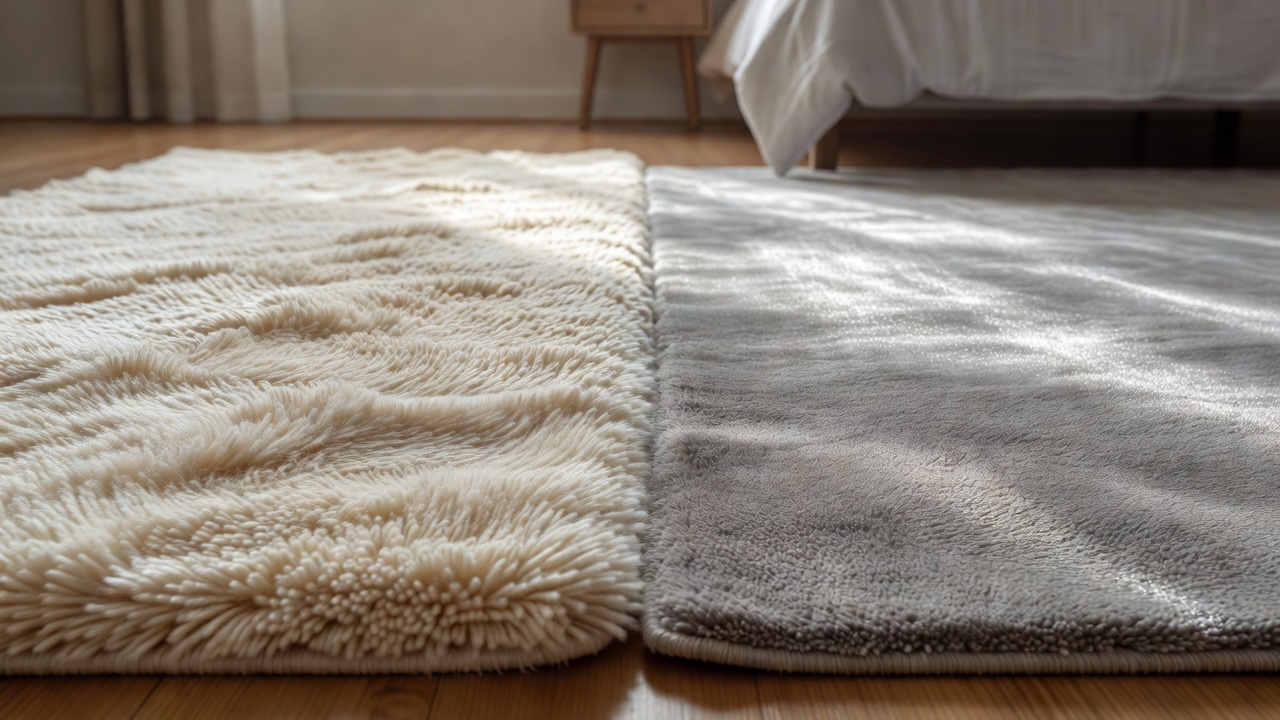
Practical Steps for Measuring and Testing Rugs
Start the process by documenting floor dimensions with a reliable tape measure while noting fixed furniture positions and electrical outlets. Create scaled paper templates of candidate rug sizes to simulate coverage on-site. Request material swatches or take advantage of retailer return policies for extended home trials lasting several days. During testing, evaluate texture under bare feet at different times of day, check for color consistency across the full surface, and assess edge binding quality. Walking across the rug multiple times reveals any shifting tendencies or comfort variations. Document observations in a simple notebook to compare options side by side before final selection.
Real-World Before-and-After Examples
One urban apartment renovation replaced a worn synthetic remnant with a medium-pile wool rug in a soft oatmeal shade, instantly warming the oak flooring and softening echoes from nearby hard surfaces while complementing existing linen bedding. Another project in a suburban home introduced a low-contrast patterned runner alongside a platform bed, correcting an asymmetrical layout and adding subtle movement to an otherwise static neutral palette. A third example involved layering a jute base with a smaller cotton accent rug in a guest room, improving acoustics and creating distinct zones for reading chairs without major construction changes. These transformations illustrate how targeted rug additions can refresh entire bedroom aesthetics efficiently.
Budget-Friendly Sourcing Tips
Focus on timeless designs rather than fleeting trends to ensure long-term satisfaction. Explore end-of-season clearances at established retailers or consider gently used options from reputable resale platforms that offer quality inspection guarantees. Prioritize pieces with sturdy construction details such as reinforced edges and consistent pile height, which signal better value regardless of initial outlay. Comparing fiber content labels and warranty terms helps identify rugs built to withstand regular bedroom use over multiple years.
Maintenance, Pet-Friendly Options, and Expanded FAQs
Weekly vacuuming with appropriate attachments removes embedded particles effectively. Prompt treatment of spills using manufacturer-recommended solutions prevents permanent discoloration. For households with pets, low-pile or flatweave constructions in treated synthetics minimize claw damage and simplify hair removal. Check safety guidelines from the CPSC for household textiles. Rotate rugs seasonally to distribute wear evenly across high-traffic zones.
Common Questions Addressed
How often should professional cleaning occur? Schedule deep cleaning every 12 to 18 months while maintaining routine vacuuming and occasional spot treatment at home.
Which rug types best suit homes with multiple pets? Tightly looped or short-pile synthetics with stain-resistant finishes reduce snagging risks and allow faster drying after accidents.
What steps address allergy concerns effectively? Select hypoallergenic synthetics or naturally antimicrobial wool, combined with regular airing and use of allergen-reducing vacuum filters. Review CDC recommendations on household allergens.
Can rugs be used successfully on radiant floor heating? Low-profile wool or synthetic options with breathable backings perform well without trapping excess heat.
How should rugs be stored during room refreshes? Roll rather than fold, wrap in breathable cotton, and keep in climate-controlled spaces away from direct sunlight.
Are there eco-conscious rug certifications worth seeking? Look for labels indicating responsible fiber sourcing and low-VOC finishes to support healthier indoor environments. Explore WHO guidance on indoor environmental quality.
Conclusion
Strategic rug selection elevates bedroom renovations by uniting style with reliable everyday performance. Applying these detailed insights on materials, dimensions, coordination, testing methods, and upkeep produces polished, comfortable results that align with 2026 modern living expectations and stand the test of time.
No comments yet. Be the first!