 Fixated on Home
Introduction to Smart Pool Upgrades
As homeowners plan 2026 renovations, integrating smart technology into outdoor pools and spas offers a blend of luxury, efficiency, and modern aesthetics. These upgrades align with contemporary landscaping trends while delivering measurable energy savings and effortless control through apps and voice commands. Smart pool systems transform traditional setups by monitoring water chemistry in real time, automating covers with solar capabilities, and enabling voice-activated features that integrate with whole-home ecosystems like Google Home or Amazon Alexa. This guide explores practical steps, comparisons, and real-world examples to help you achieve cohesive outdoor living spaces that feel both high-end and sustainable.
With rising interest in energy-efficient home features, smart pool technology stands out for its ability to reduce operational demands while enhancing daily enjoyment. Homeowners can expect improved water quality, lower utility bills over time, and designs that complement surrounding gardens, patios, and architectural styles. Whether retrofitting an existing pool or building new, these systems prioritize user-friendly interfaces and long-term reliability.
App-Based Water Chemistry Monitoring
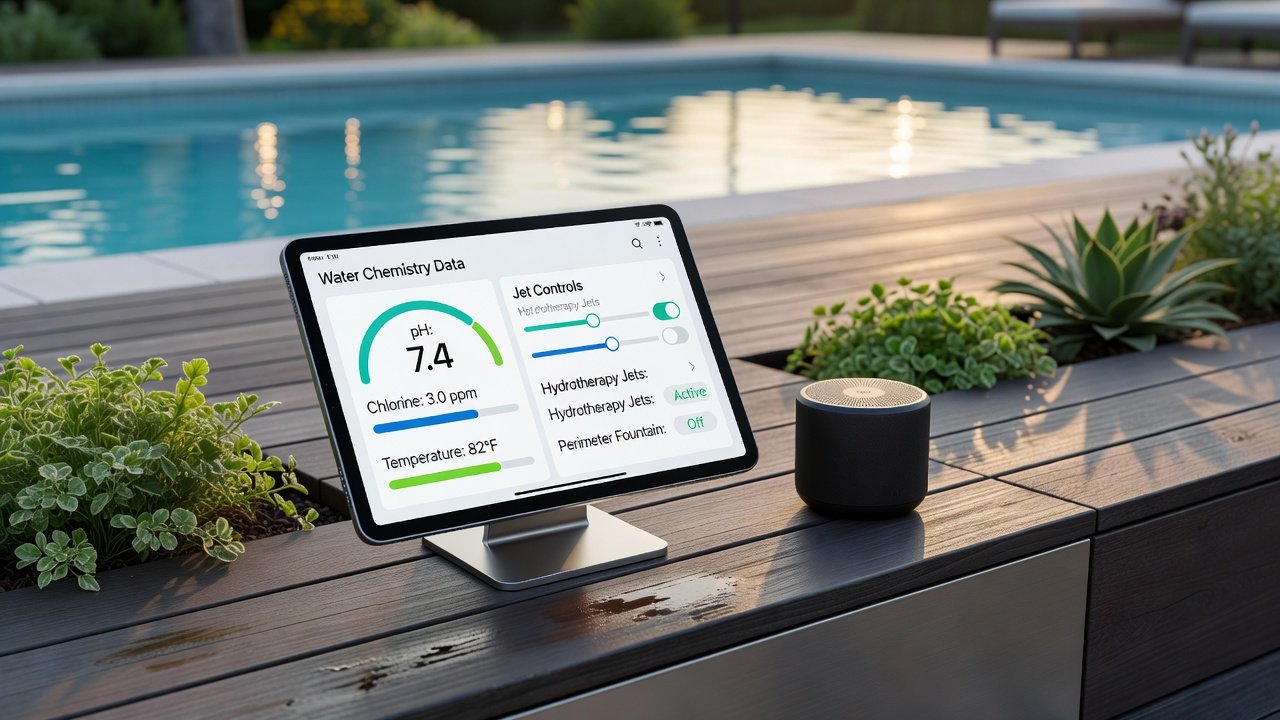
Traditional pool maintenance requires manual testing, but app-based systems use sensors to track pH, chlorine, and temperature continuously. Homeowners receive alerts via smartphone, reducing chemical overuse and preventing issues like algae growth. Advanced sensors also monitor salinity and total dissolved solids, providing a complete picture of water balance that supports swimmer comfort and equipment longevity.
Installation typically involves placing wireless sensors in the pool skimmer or return line. These connect to a central hub that syncs with dedicated apps. For compatibility with existing setups, choose systems that support Wi-Fi and Bluetooth protocols. Many units feature weather-resistant casings and solar-powered options for the sensors themselves, minimizing battery replacements. Practical examples include suburban families who reduced chemical handling by 40 percent after switching to automated monitoring, leading to safer environments for children and pets.
Real-world case studies show families in coastal areas maintaining balanced water with minimal intervention, enhancing safety for children and pets. One example involved retrofitting a 20-year-old pool, resulting in improved water clarity and reduced maintenance visits. Another homeowner in a dry climate reported fewer evaporation-related imbalances thanks to predictive alerts that adjusted chemical dosing proactively.
Automated Covers with Solar Integration
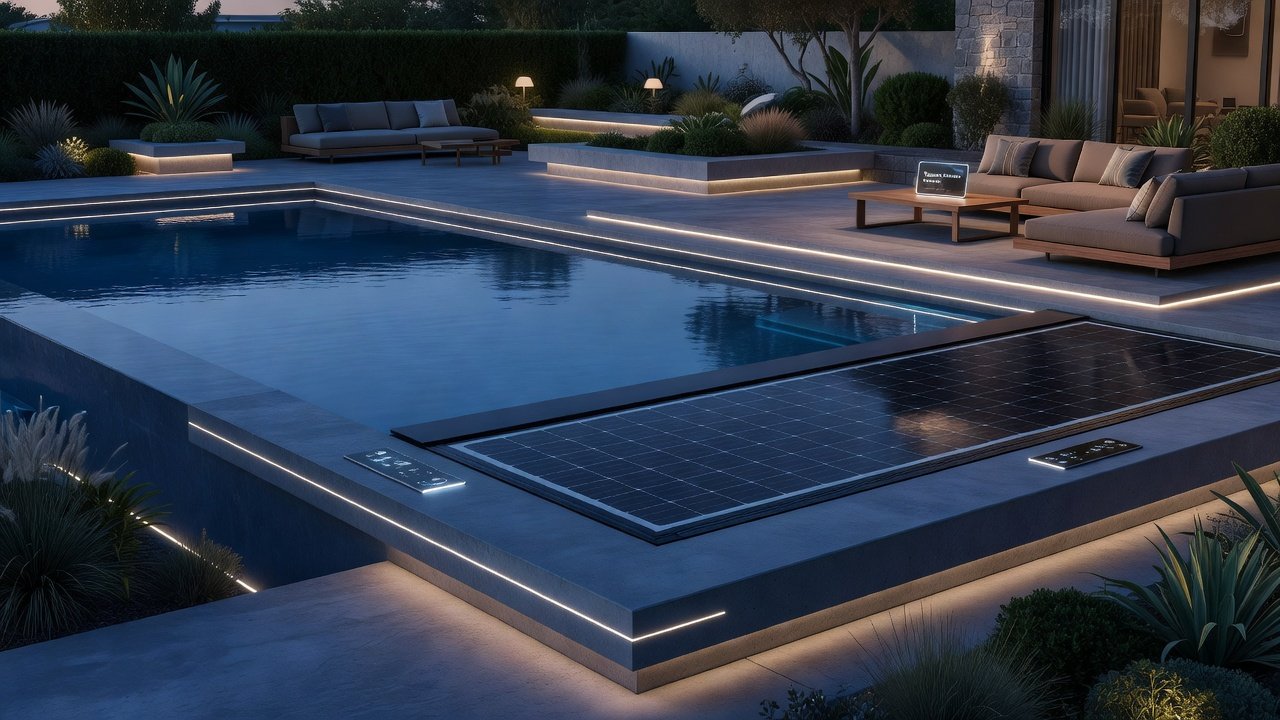
Automated pool covers not only conserve heat and reduce evaporation but also incorporate solar panels for self-sustaining operation. These systems deploy via app or schedule, protecting the pool from debris while generating power for pumps and lights. Solar integration allows the cover to harvest energy during daylight hours, storing it for nighttime use or cloudy periods.
Step-by-step installation begins with measuring the pool dimensions, followed by mounting tracks and connecting the solar array to a battery storage unit. Professional installers ensure structural compatibility with decking materials like composite wood or stone. Homeowners should verify local building codes early, as some regions require specific anchoring methods for safety. The process usually takes two to four days and can be phased to minimize disruption to daily routines.
Compared to manual covers, automated versions offer superior convenience and longevity. They blend with landscaping by using discreet, low-profile designs that complement modern outdoor furniture and lighting schemes. In practice, a family in the Southwest used their solar cover to maintain comfortable water temperatures year-round, extending the swimming season without additional heaters.
Learn more about energy-efficient home upgrades from the U.S. Department of Energy. Explore water efficiency resources from the Environmental Protection Agency.
Voice-Activated Lighting and Jets
Voice control adds a layer of luxury to poolside experiences. Integrated LED lighting and variable-speed jets respond to commands like "Alexa, set pool lights to blue" or "Hey Google, start spa jets." These features allow precise adjustments without leaving the water or reaching for controls, creating an immersive environment for relaxation or entertaining.
These features require compatible controllers wired into the pool's electrical system. Pairing with smart hubs ensures seamless operation across multiple devices. Design cohesion comes from selecting fixtures that match architectural elements, such as recessed lights echoing home facade styles. Color-changing LEDs can be programmed for different moods, from soft evening ambiance to vibrant party settings. Real examples include a Texas residence where voice-activated jets synchronized with music playlists, turning the pool into a central entertainment hub.
Compatibility with Whole-Home Ecosystems
Full integration ties pool systems into broader smart home networks, allowing centralized control via tablets or wall panels. This includes syncing with security cameras, irrigation, and HVAC for holistic energy management. Protocols like Matter or Thread enable cross-brand communication, so your pool app can interact with lighting, shades, and climate controls without multiple interfaces.
Choose platforms supporting open protocols like Zigbee or Z-Wave for future-proofing. Case studies from suburban renovations highlight how unified apps reduced overall household energy consumption through optimized scheduling. For instance, one project linked pool filtration cycles to off-peak electricity rates, creating automatic savings while maintaining pristine water conditions.
Design Integration with Contemporary Landscaping
Smart upgrades succeed when they enhance rather than interrupt outdoor aesthetics. Conceal control panels within custom planters or use matching stone finishes on equipment housings. Coordinate lighting colors with garden accents and select cover materials that echo patio paving. This approach ensures the pool feels like a natural extension of the home rather than a separate feature.
Step-by-Step Installation Overviews
- Assess current pool infrastructure and identify upgrade priorities through a professional site visit.
- Consult licensed electricians and pool specialists for code compliance and permitting requirements.
- Install sensors and hubs first, followed by covers and controls, testing each component independently.
- Configure app integrations and voice assistants, then run full-system simulations.
- Train household members on app usage and schedule seasonal calibrations for optimal performance.
Mistakes to Avoid
- Skipping professional electrical assessments, which can lead to safety issues or voided warranties.
- Choosing incompatible devices that fail to connect with existing smart hubs.
- Overlooking landscaping impact, resulting in visual clutter around the pool deck.
- Ignoring local climate factors when selecting solar components or sensor placements.
Cost Comparisons Versus Traditional Setups
While initial investments in smart technology exceed basic retrofits, long-term savings emerge from reduced chemical and energy use. Qualitative benefits include lower labor costs and extended equipment life, making them ideal for high-end 2026 outdoor renovations focused on sustainability and convenience.
Real-World Case Studies
A California hillside home combined solar covers with app monitoring, achieving year-round usability without excessive utility spikes. Another project in Florida integrated voice jets with landscape lighting for seamless evening entertaining. A Midwest family retrofitted their in-ground pool with full ecosystem controls, reporting smoother transitions between pool and spa modes during family gatherings.
FAQ: Maintenance and ROI
- How often should sensors be calibrated? Most systems recommend quarterly checks, adjustable via app notifications based on usage patterns.
- What is the typical ROI timeline? Energy-efficient features often recoup costs within a few seasons through utility reductions and fewer service calls.
- Are these upgrades compatible with existing pools? Yes, many modular solutions allow phased implementation without full replacement.
- How do voice features handle multiple users? Most hubs support personalized profiles and guest modes for flexible access.
Conclusion
Smart pool upgrades elevate 2026 outdoor living by merging technology with elegant design. By focusing on monitoring, automation, and ecosystem compatibility, homeowners create functional, luxurious spaces that deliver convenience and efficiency for years to come. Careful planning ensures these enhancements integrate beautifully with landscaping and daily life.
No comments yet. Be the first!